
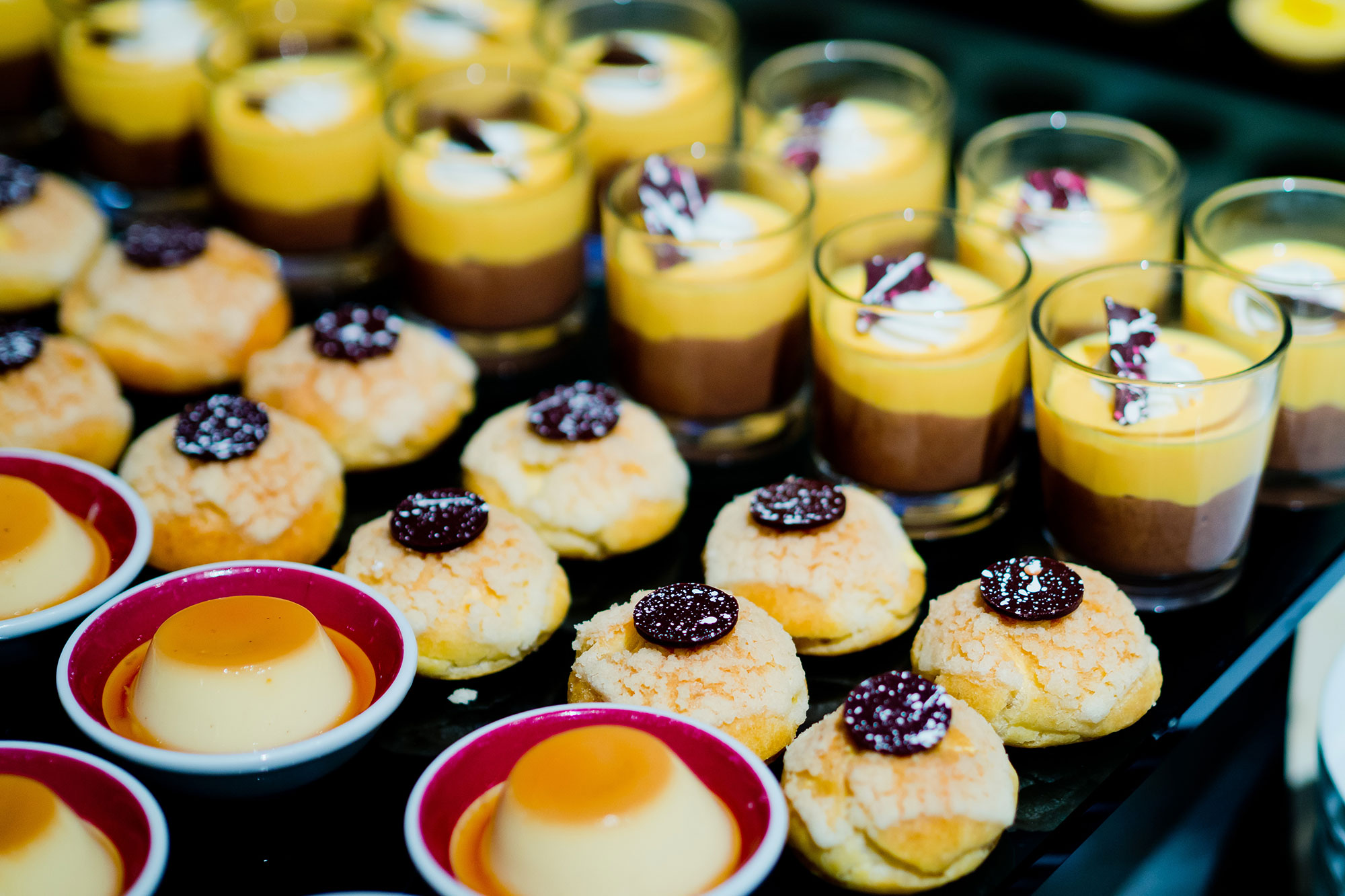
This information is for inspirational purposes only. To learn more about Frost Artisan Bakery’s current menu and custom baked goods, please contact us.
In addition to selecting appetizers and main courses, you don’t want to overlook the desserts when planning a big event. When serving desserts, two options come to mind: buffet vs. plated service. Find out the benefits of each and which serving type works best for different occasions.
Plated Desserts
Plated desserts are served to seated guests by members of a catering or service team. This service style is generally used for very formal events, such as wedding receptions, benefits or fundraisers, and high-level corporate events.
Pros and Cons of Plated Desserts
Serving plated desserts at events presents some advantages and disadvantages when you’re hosting special events.
Pros:
- Formality: If your event is a formal, black-tie occasion, plated desserts will fit the style well.
- Portion control: Every item in a plated service is accounted for in advance, resulting in greater portion control and less food waste.
- Convenience: Your guests don’t have to wait for their desserts, and the personalized service makes everyone feel special.
- Professional plating and service: Each dessert is professionally plated by the kitchen staff and served hot or cold, depending on the dessert or desserts you select.
Cons:
- Increased costs: Plated service of any type is more costly than buffet-style service because it requires more staff.
- Limits on choices: Plated service offers a more limited selection than buffet service, limiting the dessert options you can give guests.
- Limits on dietary restrictions: With fewer options, guests with specific dietary restrictions may find their choices for plated desserts somewhat limited. However, some strategy and advanced planning with your dessert provider can help.
- Service could take longer: Depending on how many service staff are available, dessert service may take longer, especially if the guest count is high.
Buffet Desserts
Buffet desserts are those that invite guests to pick and choose from various treats arranged on banquet tables. Generally, catering staff will set out desserts on a buffet and replenish them as guests remove them.
Pros and Cons of Buffet Desserts
Buffet desserts also require some considerations when you’re planning an event.
Pros:
- Variety: You can offer a broad selection of desserts in a dessert buffet presentation.
- Greater consideration for dietary restrictions: A wider selection of desserts will suit guests with a range of dietary restrictions.
- Enhanced socialization possibilities: Buffets are meant to convey casual entertaining. With this presentation style, guests can mingle over desserts.
- Flexible portions: Since guests are serving themselves, they can adjust their serving size.
- Cost benefits: Since dessert buffets require fewer staff to serve, they are more cost-effective for event budgets.
Cons:
- Longer lines: Service lines can be longer, particularly if you have a large number of event attendees.
- Limited portion control: Portion control can be a challenge, especially since you have to accommodate a wide range of tastes.
- Event format: Buffet desserts may not fit the style of very formal events.
- Mobility considerations: Guests with mobility challenges may not be able to serve themselves from a buffet.
- Temperature control: Buffet presentations can make it challenging to serve hot and cold desserts together, unless chafing dishes or hot plates are used.
Create Memorable Desserts for Events with Frost
If you’re planning a big event and need help deciding whether to go with buffet vs. plated service for desserts, turn to the experts at Frost Artisan Bakery. Let’s talk dessert today.